



Blog
Paddy Tungro Virus

Paddy Diseases
Tungro Virus

Symptoms
- Plants affected by tungro exhibit stunting and reduced tillering. Leaves become yellow or orange-yellow, it may also have rust-colored spots.
- Yellowing starts from the tip of the leaf and may extend to the lower part of the leaf blade. Third leaf from the top most infected plants is taller than other leaves.
- Young leaves are often mottled with pale green to whitish interveinal stripes and the old leaves may have rusty streaks of various sizes.
- Delayed flowering – panicles are small and not completely exerted
- Most panicles are sterile or partially filled grains.
- The plants may be killed if infected early.
- Tungro virus disease affects all growth stages of the rice plant specifically high at vegetative stage.
-
Detection techniques :
Tungro infected plants can be chemically identified by lodine Test:
- Collect leaf samples at 6 a.m.
- The top 10 cm portion of the leaf is immersed in a solution containing 2 g of iodine and 6 g of potassium iodide in 100 ml of water for 15 minutes or 10 ml of tincture of iodine + 140 ml of water for one hour. Washed in water for detection.
- Tungro infected leaves develop dark blue streaks.
Management
- Vector Management: Control the leafhopper vector population through field sanitation, such as removing weeds and volunteer rice plants that can harbor leafhoppers.
- Biological Agents: Use biological control agents such as Beauveria bassiana, a fungal pathogen that infects leafhoppers, to reduce vector populations.
|
Fungicide |
Dosage |
|---|---|
|
1000ml/acre |
|
|
250ml/acre |
- Plants affected by tungro exhibit stunting and reduced tillering. Leaves become yellow or orange-yellow, it may also have rust-colored spots.
- Yellowing starts from the tip of the leaf and may extend to the lower part of the leaf blade. Third leaf from the top most infected plants is taller than other leaves.
- Young leaves are often mottled with pale green to whitish interveinal stripes and the old leaves may have rusty streaks of various sizes.
- Delayed flowering – panicles are small and not completely exerted
- Most panicles are sterile or partially filled grains.
- The plants may be killed if infected early.
- Tungro virus disease affects all growth stages of the rice plant specifically high at vegetative stage.
-
Detection techniques :
Tungro infected plants can be chemically identified by lodine Test:
- Collect leaf samples at 6 a.m.
- The top 10 cm portion of the leaf is immersed in a solution containing 2 g of iodine and 6 g of potassium iodide in 100 ml of water for 15 minutes or 10 ml of tincture of iodine + 140 ml of water for one hour. Washed in water for detection.
- Tungro infected leaves develop dark blue streaks.
- Vector Management: Control the leafhopper vector population through field sanitation, such as removing weeds and volunteer rice plants that can harbor leafhoppers.
- Biological Agents: Use biological control agents such as Beauveria bassiana, a fungal pathogen that infects leafhoppers, to reduce vector populations.
|
Fungicide |
Dosage |
|---|---|
|
1000ml/acre |
|
|
250ml/acre |

Add to wishlist
Dhanuka Media
Insecticides
₹312 – ₹1,099
Select options
This product has multiple variants. The options may be chosen on the product page
Quick view
-47%
Add to wishlist
Gharda Mahaveer
Insecticides
₹450 – ₹775
Select options
This product has multiple variants. The options may be chosen on the product page
Quick view
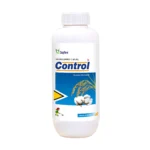
Add to wishlist
Safex Control
Insecticides
₹999
Select options
This product has multiple variants. The options may be chosen on the product page
Quick view
