



Blog
Paddy Bacterial Leaf Blight

Paddy Diseases
Bacterial Leaf Blight

Symptoms
- Bacterial blight syndrome exhibits three types of symptoms: leaf blight, kresek (the seedling blight or wilt phase) and the pale-yellow leaf.
- The disease has been referred to as “bacterial leaf blight” to indicate that the “leaf blight” phase of the syndrome is the most distinct and commonly observed symptom.
- Seedlings in the nursery show circular, yellow spots in the margin, that enlarge, coalesce leading to drying of foliage.
- “Kresek” symptom is seen in seedlings, 1-2 weeks after transplanting.
- The bacteria enter through the cut wounds in the leaf tips, become systemic and cause death of entire seedling.
- In grown up plants water soaked, translucent lesions appear near the leaf margin.
- The lesions enlarge both in length and width with a wavy margin and turn straw yellow within a few days, covering the entire leaf.
- As the disease advances, the lesions cover the entire lamina which turns white or straw coloured.
- Milky or opaque dew drops containing bacterial masses are formed on young lesions in the early morning.
- They dry up on the surface leaving a white encrustation.
- The affected grains have discoloured spots.
- If the cut end of leaf is dipped in water, it becomes turbid because of bacterial ooze.
Management
-
Favourable conditions / Epidemiology:
- Clipping of tip of the seedling at the time of transplanting
- Heavy rain, heavy dew, flooding, deep irrigation water
- Severe wind and temperature of 25-30 0 C
- Application of excessive nitrogen, especially late top dressing
- Antagonistic Bacteria: Use biological control agents like Pseudomonas fluorescens and other antagonistic bacteria that can suppress Xanthomonas oryzae populations in the field
|
Fungicide |
Dosage |
|---|---|
|
1kg/acre |
|
|
15-20g/acre |
- Bacterial blight syndrome exhibits three types of symptoms: leaf blight, kresek (the seedling blight or wilt phase) and the pale-yellow leaf.
- The disease has been referred to as “bacterial leaf blight” to indicate that the “leaf blight” phase of the syndrome is the most distinct and commonly observed symptom.
- Seedlings in the nursery show circular, yellow spots in the margin, that enlarge, coalesce leading to drying of foliage.
- “Kresek” symptom is seen in seedlings, 1-2 weeks after transplanting.
- The bacteria enter through the cut wounds in the leaf tips, become systemic and cause death of entire seedling.
- In grown up plants water soaked, translucent lesions appear near the leaf margin.
- The lesions enlarge both in length and width with a wavy margin and turn straw yellow within a few days, covering the entire leaf.
- As the disease advances, the lesions cover the entire lamina which turns white or straw coloured.
- Milky or opaque dew drops containing bacterial masses are formed on young lesions in the early morning.
- They dry up on the surface leaving a white encrustation.
- The affected grains have discoloured spots.
- If the cut end of leaf is dipped in water, it becomes turbid because of bacterial ooze.
-
Favourable conditions / Epidemiology:
- Clipping of tip of the seedling at the time of transplanting
- Heavy rain, heavy dew, flooding, deep irrigation water
- Severe wind and temperature of 25-30 0 C
- Application of excessive nitrogen, especially late top dressing
- Antagonistic Bacteria: Use biological control agents like Pseudomonas fluorescens and other antagonistic bacteria that can suppress Xanthomonas oryzae populations in the field
|
Fungicide |
Dosage |
|---|---|
|
1kg/acre |
|
|
15-20g/acre |
Add to wishlist
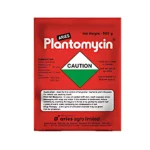
Aries Plantomycin
Fungicides
₹0 – ₹505
Select options
This product has multiple variants. The options may be chosen on the product page
Quick view
-8%
Add to wishlist
Mankind Pseudomonas Fluorescens 0.5%
Bio Pesticides
Original price was: ₹325.₹299Current price is: ₹299.
Select options
This product has multiple variants. The options may be chosen on the product page
Quick view
