



Blog
Tomato Bacterial Stem & Fruit Canker

Tomato Diseases
Bacterial Stem & Fruit Canker
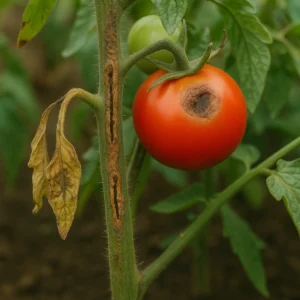
Symptoms
- Seedlings, leaves, stem and fruits are affected.
- Spots on leaves, stems and fruits.
- White blister like spots in the margins of leaves and turn brown.
- Wilting of leaves and shoots, streaks on stems and petioles.
- Small, water soaked spots with white halo on fruits.
- Centre of spots become slightly raised.
- Tan coloured and rough.
- Cankers develop and form cracks.
- Slimy bacterial ooze through cracks.
- Vascular discolouration.
Identification
-
- Causal Organism: Clavibacter michiganensis subsp. michiganensis (Smith) Davis
- Pathogen: Gram-positive, non-motile, rod-shaped, aerobic bacterium.
- Survival and Mode of Spread:
> Survival: In Infected debris> Primary spread: Infected plant debris and seed> Secondary spread: Rain splash
- Favourable conditions:
> Soil temperature – 28°C> High humidity or persistent dew> Moist weather with intermittent showers
Management
- Field sanitation
- Crop rotation with non host crops
- Use of disease free seeds
- Disinfection of tools and implements
- Removal of weeds
- Seedlings, leaves, stem and fruits are affected.
- Spots on leaves, stems and fruits.
- White blister like spots in the margins of leaves and turn brown.
- Wilting of leaves and shoots, streaks on stems and petioles.
- Small, water soaked spots with white halo on fruits.
- Centre of spots become slightly raised.
- Tan coloured and rough.
- Cankers develop and form cracks.
- Slimy bacterial ooze through cracks.
- Vascular discolouration.
-
- Causal Organism: Clavibacter michiganensis subsp. michiganensis (Smith) Davis
- Pathogen: Gram-positive, non-motile, rod-shaped, aerobic bacterium.
- Survival and Mode of Spread:
> Survival: In Infected debris> Primary spread: Infected plant debris and seed> Secondary spread: Rain splash
- Favourable conditions:
> Soil temperature – 28°C> High humidity or persistent dew> Moist weather with intermittent showers
- Field sanitation
- Crop rotation with non host crops
- Use of disease free seeds
- Disinfection of tools and implements
- Removal of weeds
