



Blog
Brinjal Bacterial Wilt

Brinjal Diseases
Bacterial Wilt
Symptoms
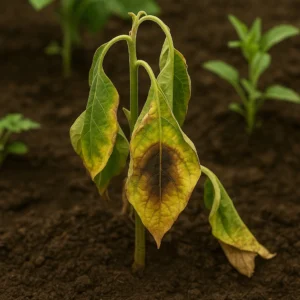
- Small, round to irregular spots with grey centre and dark margin on leaves.
- Spots coalesce and leaves are blighted.
- Complete defoliation.
- Stems and flowers are affected.
Management
- Pant samrat variety is tolerant.
- Crop rotation with cruciferous vegetables such as cauliflower help in reducing the disease incidence.
- Fields should be kept clean and effected parts are to be collected and burnt.
- Spray Copper fungicides to control the disease (2% Bordeaux mixture.)
- The disease is more prevalent in the presence of root knot Nematodes, so control of these nematodes will suppress the disease spread.
- Soil Health Management:
- Improve soil structure and drainage to prevent waterlogging. Practices like raised beds, organic matter addition, and proper irrigation scheduling can help.
- Solarize the soil by covering it with clear plastic for 4-6 weeks during the
- Antagonistic Microorganisms: Application of beneficial bacteria such as *Pseudomonas
- Trichoderma spp.: Trichoderma-based products can be applied to soil to enhance microbial diversity and suppress soil-borne pathogens, including the wilt bacterium.
|
Insecticide |
Dosage |
|---|---|
|
Bacillus Thuringiensis Var. Kurstaki Serotype 3a, 3b, Sa Ii WG |
42gm/kg of seed |
|
4 gm/kg of seed |
|
|
4 gm/kg of seed |
|
|
15-20g/acre |
- Small, round to irregular spots with grey centre and dark margin on leaves.
- Spots coalesce and leaves are blighted.
- Complete defoliation.
- Stems and flowers are affected.
- Pant samrat variety is tolerant.
- Crop rotation with cruciferous vegetables such as cauliflower help in reducing the disease incidence.
- Fields should be kept clean and effected parts are to be collected and burnt.
- Spray Copper fungicides to control the disease (2% Bordeaux mixture.)
- The disease is more prevalent in the presence of root knot Nematodes, so control of these nematodes will suppress the disease spread.
- Soil Health Management:
- Improve soil structure and drainage to prevent waterlogging. Practices like raised beds, organic matter addition, and proper irrigation scheduling can help.
- Solarize the soil by covering it with clear plastic for 4-6 weeks during the
- Antagonistic Microorganisms: Application of beneficial bacteria such as *Pseudomonas
- Trichoderma spp.: Trichoderma-based products can be applied to soil to enhance microbial diversity and suppress soil-borne pathogens, including the wilt bacterium.
|
Insecticide |
Dosage |
|---|---|
|
Bacillus Thuringiensis Var. Kurstaki Serotype 3a, 3b, Sa Ii WG |
42gm/kg of seed |
|
4 gm/kg of seed |
|
|
4 gm/kg of seed |
|
|
15-20g/acre |
Add to wishlist
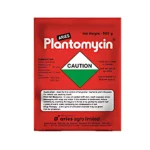
Aries Plantomycin
Fungicides
₹160 – ₹505
Select options
This product has multiple variants. The options may be chosen on the product page
Quick view
-8%
Add to wishlist
Mankind Pseudomonas Fluorescens 0.5%
Bio Pesticides
Original price was: ₹325.₹299Current price is: ₹299.
Select options
This product has multiple variants. The options may be chosen on the product page
Quick view
-2%Sold out
Add to wishlist
Mankind Triko(Trichoderma viride)
Bio Pesticides
Original price was: ₹325.₹319Current price is: ₹319.
Select options
This product has multiple variants. The options may be chosen on the product page
Quick view
